

Different environments.
The same nervous system.
W H Y I D O T H I S

I have spent most of my career watching capable people be misunderstood.
W H E R E I T S T A R T E D
A moment in a classroom
Years ago, while working in specialist education, I watched a teaching assistant stop a little boy from stimming. She saw behaviour that needed correcting. I saw a child trying to regulate his own nervous system.
That moment has stayed with me ever since, because it taught me something that has shaped every stage of my career. Behaviour makes far more sense when we understand what sits beneath it.
Working alongside children with a wide range of additional needs, I became fascinated by something far bigger than diagnosis or labels. Time and again, when the environment changed, people changed with it. Children who struggled in one setting could thrive in another. Progress did not always arrive in the same way or on the same timeline, but one lesson stayed constant.
Potential is profoundly influenced by the environment around us.
W H A T C A M E N E X T
The same patterns, a different room
That understanding led me to study psychology, because I wanted to do more than understand people. I wanted to help them create meaningful change. I have always believed our minds are remarkably adaptable. Not because difficulties disappear, but because understanding ourselves gives us more choice in how we respond to them.
Years later my career took me into senior educational leadership, overseeing curriculum at a national level. The setting had changed. The patterns had not.
Talented people were struggling under relentless change, competing priorities and constant demands. Many appeared to be coping while privately carrying exhaustion, anxiety and self-doubt. It became clear to me that performance is not simply about capability. It is also about the environment people are expected to perform within.
My own diagnosis as an adult brought much of this into focus. It did not change who I was. It gave me a language for what I had been watching for years.
Most people do not need fixing. They need understanding.
T H E Q U E S T I O N
We have been asking the wrong one
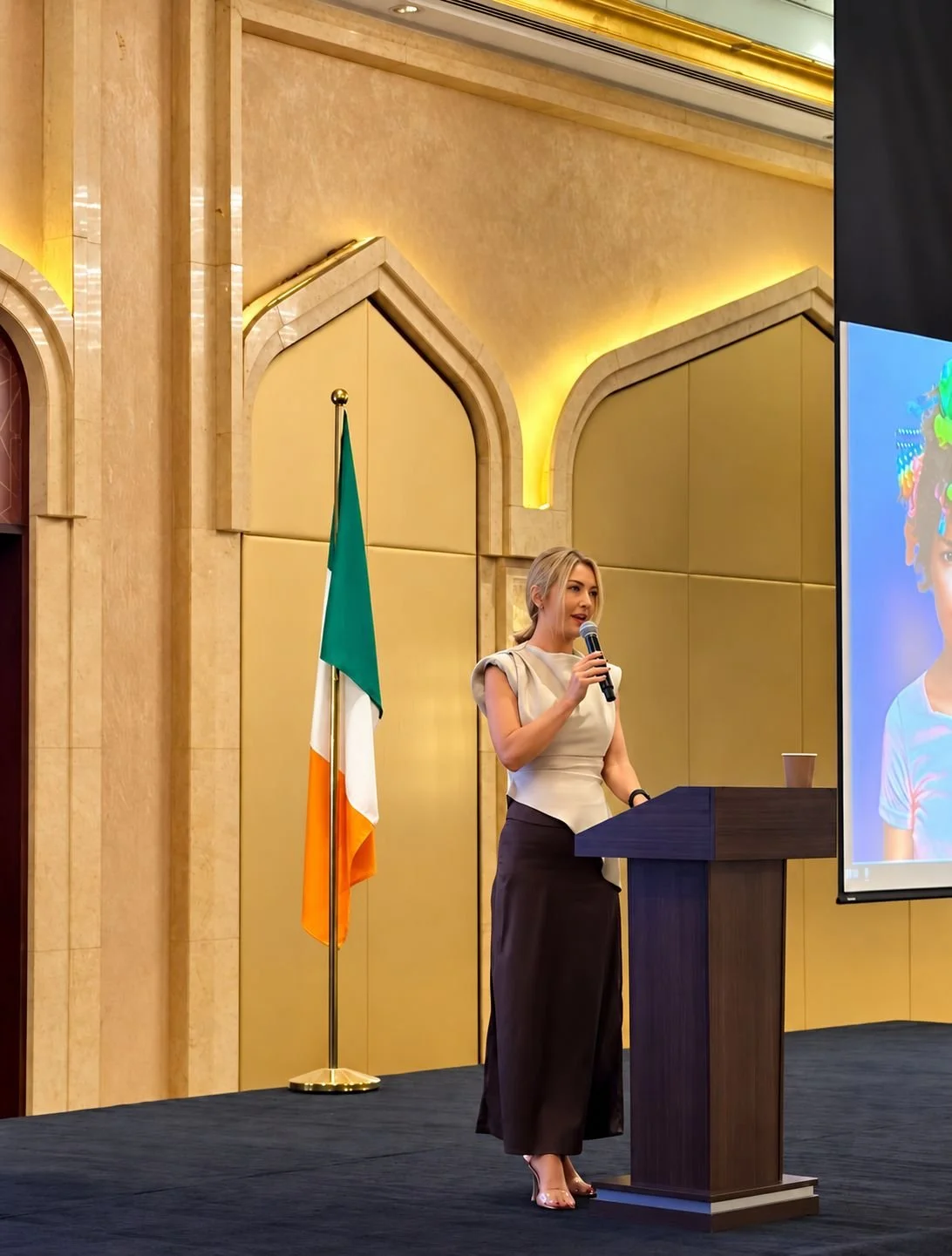
I work with organisations, leaders and individuals because I believe we have been asking the wrong question for far too long. Instead of asking what is wrong with this person, we should be asking what this environment is asking this person to manage, and their nervous system, to manage.
That question changes how we lead, how we educate, how we coach, and ultimately how people experience themselves.
My work sits at the intersection of psychology, leadership and organisational performance. I help organisations build environments where people can think clearly, perform sustainably and feel safe enough to contribute at their best. I help leaders understand that the state they lead from nervous system shapes the people around them. And I help individuals stop measuring their worth by systems that were never designed with human variability in mind.
T H E F A L S E C H O I C E
Wellbeing or performance
People often ask whether my work is about wellbeing or performance. I do not believe those are separate conversations.
The healthiest organisations I have worked with are also some of the highest performing. Not because they lower expectations, but because they understand that sustainable performance depends on people feeling safe enough to think, recover, collaborate and innovate.
That is what I want organisations to build, and it is why I do this work. Success should never come at the cost of who we are. Organisations should be judged not only by what their people achieve, but by what it costs them to achieve it.
Performance matters.
Results matter.
But so do people.
And so does how they get there.
Curious whether we would be a good fit?
The easiest way to find out is a conversation.